As an Amazon Associate, we earn from qualifying purchases. Some links may be affiliate links at no extra cost to you. Although our opinions are based on curated research, we haven't used these products. Articles generated with AI.

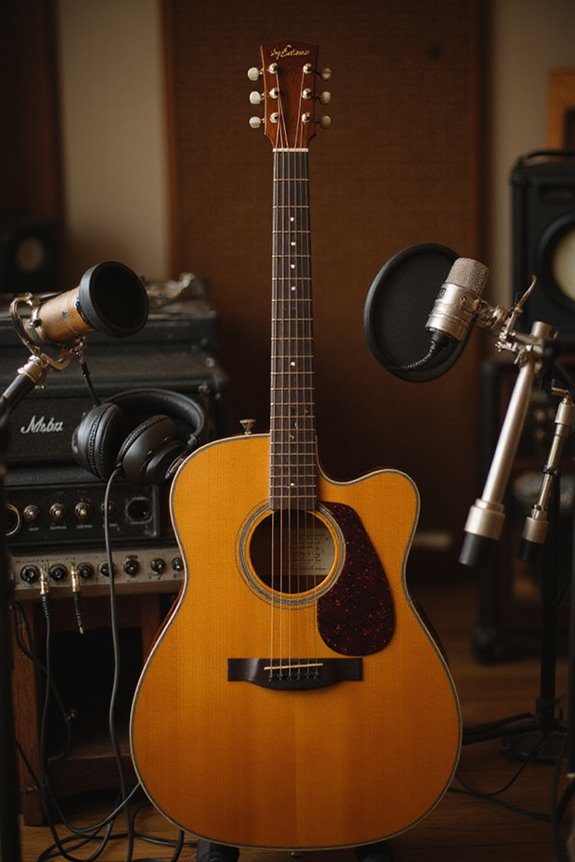
Microphone Placement For Acoustic Guitar

To optimize microphone placement for acoustic guitar, we should position the mic near the neck-body junction, about 12 to 16 inches away. This placement balances tone while avoiding overwhelming bass. For added clarity, angle the mic slightly away from the sound hole to minimize bass overload. Using techniques like spaced mics or the M/S method can enhance stereo width and capture diverse tonal qualities. Interested in more tips to elevate your recording game?
Key Takeaways
- Position the microphone at the neck-body junction, 12 to 16 inches away, for a balanced mix of sound.
- Avoid placing the mic directly in front of the sound hole to prevent bass washout; target the area just off the sound hole instead.
- Use spaced microphones adhering to the 3-to-1 rule for a broad stereo image and to minimize phase issues.
- Experiment with mic angles and distances to control tonal balance; slight adjustments can soften harsh frequencies.
- Choose appropriate microphone types, such as large diaphragm condensers for warmth or small diaphragm condensers for detail, based on your desired sound.
Optimal Single Microphone Positioning
You may be interested

How can we achieve the best sound when recording an acoustic guitar with just one microphone? The ideal placement is at the neck-body junction, pointing towards this spot to capture a balanced mix of body resonance and string detail. By positioning the mic about 12 to 16 inches away, we can avoid overwhelming bass while ensuring a fuller sound. Slight adjustments in angle and distance help us fine-tune that tonal balance. It’s essential to avoid placing the mic directly in front of the sound hole, as this can lead to excessive bass washout. Instead, targeting the area just off the sound hole balances warmth and clarity, allowing the guitar’s natural sound to shine through beautifully.

A broadcast-quality dynamic microphone a rich, balanced sound optimized for podcasting

INSTRUMENT CLARITY: A contoured frequency response with a refined presence boost enhances attack, detail, and clarity, helping guitar amps, snare drums, brass, and acoustic instruments stand out cleanly in both live mixes and studio recordings

Metal construction-rugged and reliable
Multiple Microphone Techniques and Stereo Setups
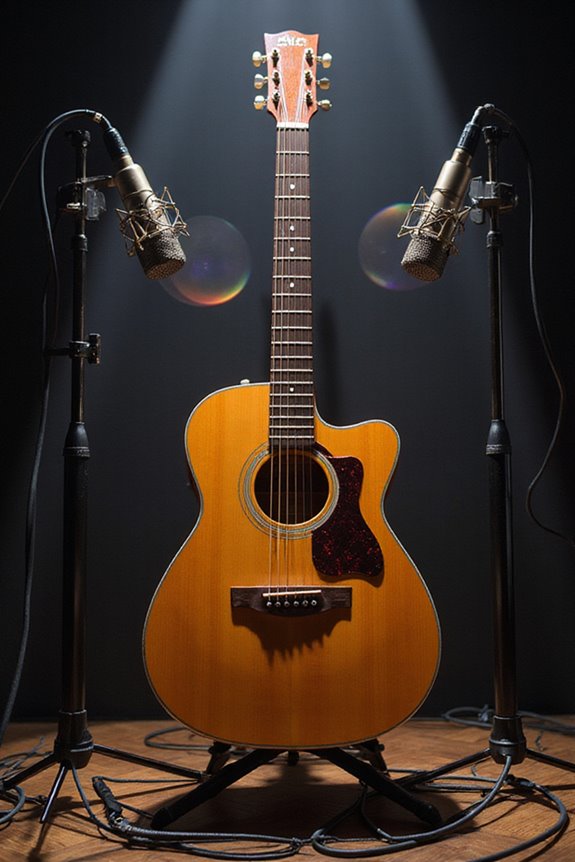
When we explore multiple microphone techniques and stereo setups for recording acoustic guitar, we reveal a range of options that can elevate our sound quality considerably. Utilizing spaced mics can create a broad stereo image while adhering to the 3-to-1 rule helps minimize phase issues. Near-coincident mics, positioned closely, simulate the listener’s ears, offering depth through level and timing differences. Coincident mics, like the X-Y technique, guarantee phase coherence but may lack some stereo depth. The M/S technique enhances variable stereo width and maintains mono compatibility. Additionally, dual mic placement allows us to capture diverse tonal qualities by positioning one mic near the 12th fret and another toward the body, balancing direct and ambient sounds effectively.
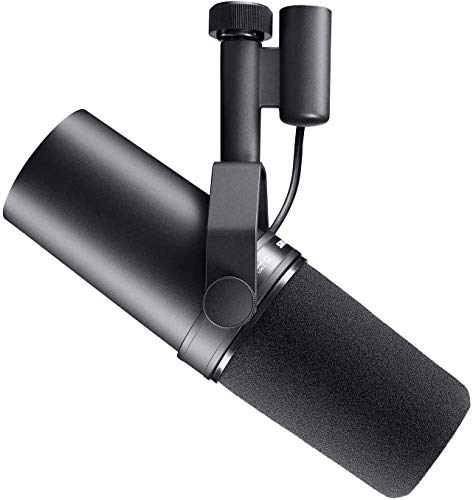
NATURAL VOCALS: Engineered with a dynamic cartridge and wide-range frequency response, the Shure SM7B captures warm, balanced vocals with exceptional clarity, making it ideal for singing, podcasting, voiceover, and professional studio recording

Powerful JBL Pro Sound: Two 6.5" woofers that deliver clean, precise, deep bass even at top volume and a pair of 25mm dome tweeters that produce crystal clear highs. Loud enough to fill a space the size of a tennis court with music.

Powerful JBL Pro Sound: Rock out to powerful JBL Pro Sound that delivers clear, dynamic sounds and deeper bass even at top volume.
Microphone Types and Characteristics
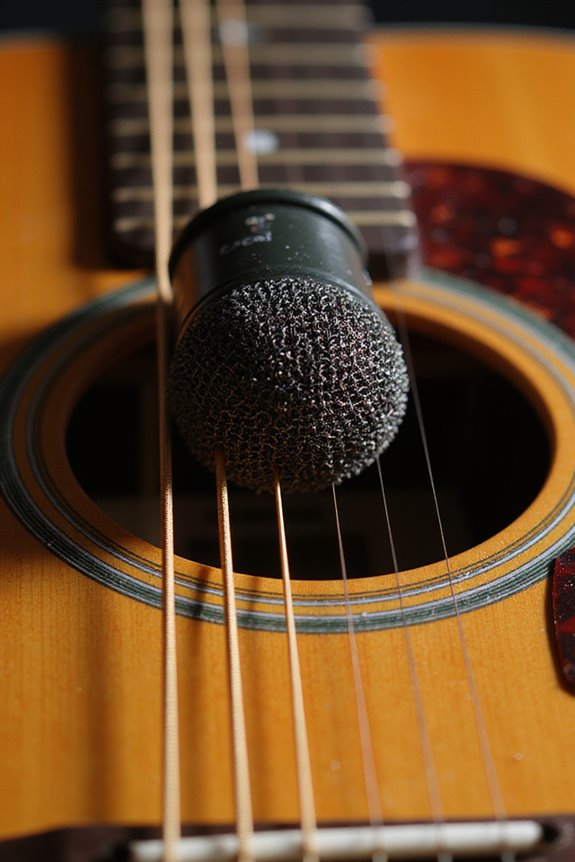
Understanding the various types of microphones and their unique characteristics is essential for achieving the best acoustic guitar recordings.
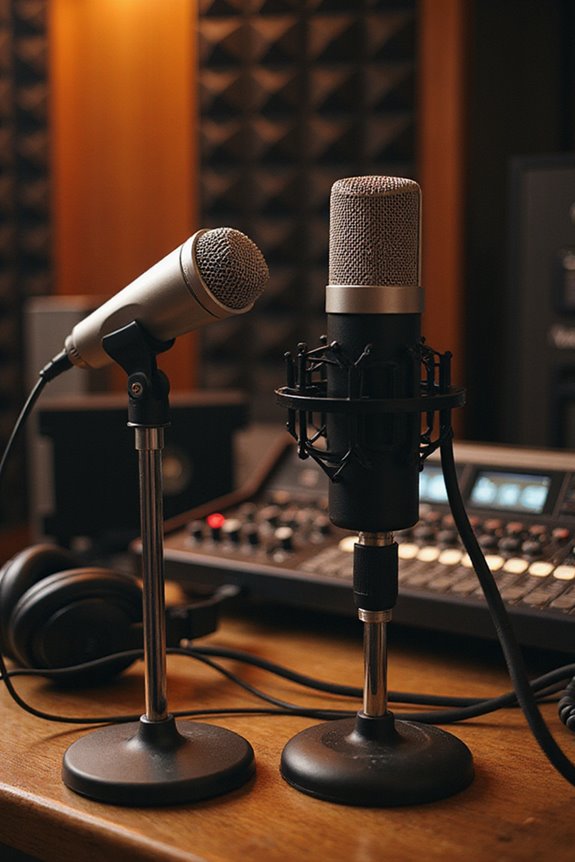
Dynamic microphones are robust and handle high sound pressure levels well, but they typically have a narrower frequency response, making them less sensitive to the subtle nuances of acoustic guitars. In contrast, condenser microphones are the go-to choice for studios due to their high sensitivity and wide frequency response. Small diaphragm condensers excel at capturing detail, while large diaphragm condensers add warmth and fullness.
For those seeking a vintage sound, ribbon microphones offer a unique tonal quality, though they’re less common. Choosing the right microphone can greatly impact how well we capture the true essence of our acoustic guitar recordings.

This microphone requires phantom power and performs best with a 48 Vdc supply (IEC-61938). However, it will operate with slightly decreased headroom and sensitivity with supplies as low as 11 Vdc. Most modern mixers provide phantom power. You must use a balanced microphone cable: XLR-to-XLR or XLR-to-TRS.

Classic Vintage Tone with Modern Clarity: Experience vintage microphone tone in a compact studio microphone design with the Roswell Pro Audio Mini K47. This professional studio mic features a genuine 34mm K47 “true condenser” large-diaphragm capsule that captures tight lows, detailed mids, and a neutral top end - perfect for recording vocals, acoustic guitar, electric guitar, piano & drums. this large diaphragm condenser mic provides premium performance for voiceovers, podcasts, and instruments.

LEGENDARY VOCAL CLARITY: A finely tuned frequency response with subtle midrange lift delivers warm, articulate vocals that cut through any mix, offering the unmistakable sound quality that has defined professional stages and studios for generations
Distance and Angle Effects on Tonal Capture
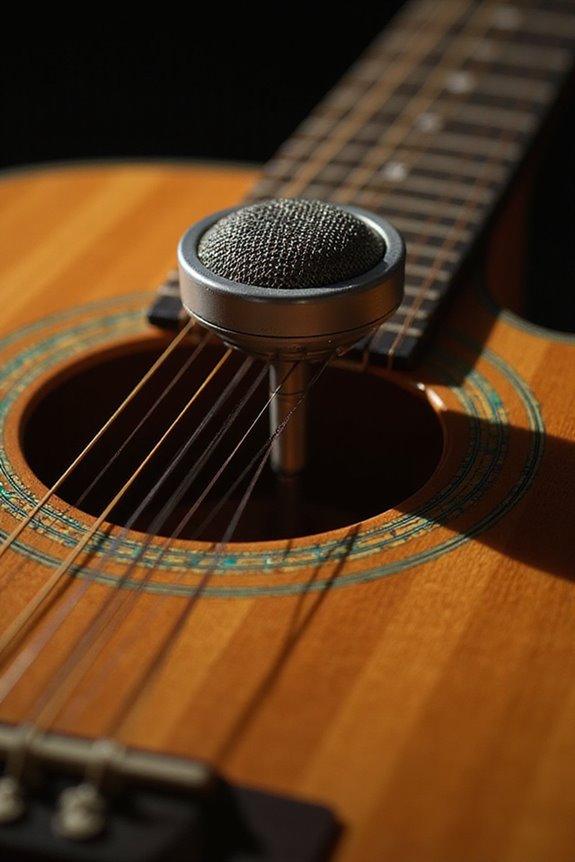
While we might think that simply placing a microphone near an acoustic guitar will yield great results, the distance and angle at which we position it play crucial roles in shaping the final sound. For instance, distance adjustments of about 12 to 16 inches from the 12th fret capture a balanced tone, while moving the mic closer can lead to a boomy low end. Angle variations also matter; angling the mic off-axis can soften harsh frequencies, providing a warmer sound. If we place the mic slightly above or behind the bridge, we can add bass without overpowering the overall tonal balance. These adjustments allow us to control the mic’s response, ensuring we capture the guitar’s unique character effectively.
Avoiding Unwanted Noise and Bass Overload
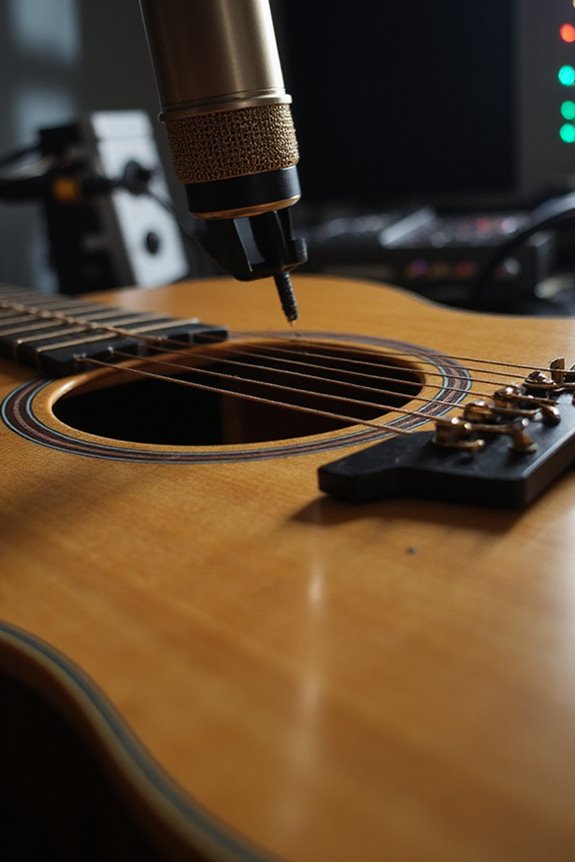
Capturing the true essence of an acoustic guitar requires careful attention to microphone placement, especially when it comes to unwanted noise and bass overload. To avoid these issues, we should steer clear of placing the mic directly in front of the sound hole, as it can create a “fire hose” effect that overwhelms the delicate tones. Instead, positioning the mic slightly above the sound hole or near the bridge helps balance the bass frequencies. Additionally, angling the mic away from the sound hole can further reduce bass overload while minimizing unwanted noise from fret movements or player breath. By keeping the mic about 6 to 16 inches away, we can maintain clarity and control, ensuring an authentic sound capture.
Frequently Asked Questions
How Do Different Guitar Types Affect Microphone Placement?
Did you know that guitar body size influences tonal characteristics considerably? When we consider guitar shapes, we find that body size affects pickup placement, requiring different mic techniques for ideal sound based on each guitar’s unique attributes.
What Are the Best Mics for Live Acoustic Performances?
When choosing the best mics for live acoustic performances, we should consider both dynamic microphones for durability and condenser microphones for clarity. Each type offers unique benefits that enhance our overall sound experience on stage.
Can I Use a Smartphone for Recording Acoustic Guitar?
Absolutely, we can use smartphones for recording acoustic guitar! By choosing the right smartphone apps and adjusting settings, we can greatly enhance recording quality and capture a fuller, richer sound. Let’s explore this together!
How Do I Reduce Feedback When Miking an Acoustic Guitar?
To reduce feedback, we can use feedback prevention techniques like adjusting the microphone angle and positioning. Keeping mics away from speakers and using directional mics helps us capture the guitar’s sound while minimizing unwanted noise.
What Role Does Room Acoustics Play in Mic Placement?
“Good fences make good neighbors.” In our recording experience, room dimensions and acoustic treatment greatly influence mic placement, as they help balance direct sound and reflections, ensuring a clear and pleasing audio capture.