As an Amazon Associate, we earn from qualifying purchases. Some links on this site are affiliate links at no extra cost to you. Our recommendations are based on thorough research and editorial judgment.


Setting Intonation On Electric Guitars

Setting intonation on electric guitars is essential for ensuring each note rings true. We start by using a high-quality tuner to compare the open string pitch with the 12th fret note. If it’s sharp, we move the saddle back; if flat, we move it forward. It’s important to make these adjustments slowly and retune after each change. Plus, considering string gauge and bridge type can affect intonation. Let’s explore more techniques and tools that can elevate your setup.
Key Takeaways
- Use a high-quality chromatic tuner to compare the open string pitch with the 12th fret note for accurate intonation adjustments.
- Move the saddle backward if the fretted note is sharp and forward if it’s flat, adjusting incrementally and retuning after each change.
- Check the neck curvature and action height, as they significantly affect string contact and overall intonation stability.
- Record saddle positions after adjustments for future reference, ensuring consistent intonation maintenance over time.
- Regularly monitor intonation with a high-precision tuner and tune all strings to standard pitch before making any adjustments.
Tools and Preparation for Intonation Adjustment
You may be interested



When it comes to setting up your electric guitar’s intonation, having the right tools at your disposal can make all the difference. We need a high-quality chromatic tuner to guarantee accurate pitch reading, and a capo can help hold strings down when necessary. For precise intonation checks, an electronic strobe tuner is invaluable.
Regular tool maintenance is vital; using the right screwdrivers and wrenches tailored to our guitar’s specific needs prevents stripping and damage. Imagine using a string winder to speed up changes while a string tension gauge helps maintain consistency. By preparing our workspace with soft cloths and a sturdy stand, we protect our instrument and make the process smoother. With these tools, we’ll achieve peak tuning frequency effortlessly. Additionally, having a comprehensive guitar maintenance tool kit ensures we are equipped for any adjustments or repairs needed during the intonation process.
Recommended Products
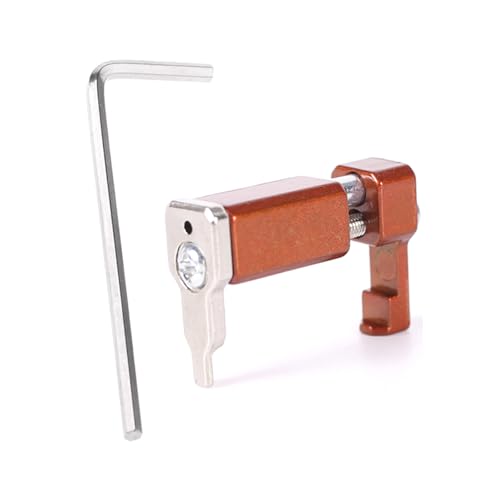
♻️ VERSATILE COMPATIBILITY: This guitar bridge adjustment tool works with multiple tremolo bridge styles ,making it an essential electric guitar setup accessory for precise intonation correction.
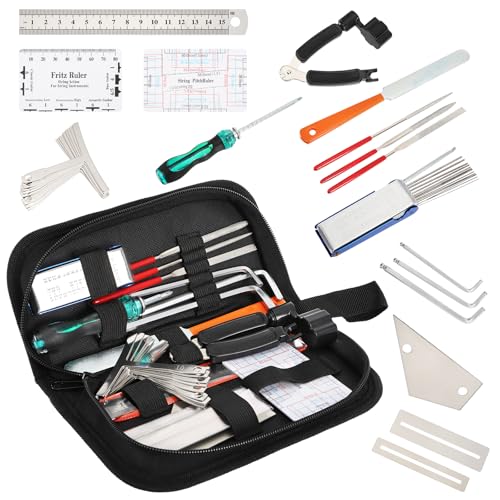
Package: Include a fret file, a dual purpose screwdriver, a steel ruler, a guitar nut file, 3 Hex wrenches,3 diamond files, a piece of 3 in 1 string cutter, 9 stainless steel under string radius gauges, a fret leveling ruler, a string action ruler, 4 fret board guards and a storage bag

All-in-one instrument care system
Technique for Adjusting String Length and Saddle Position
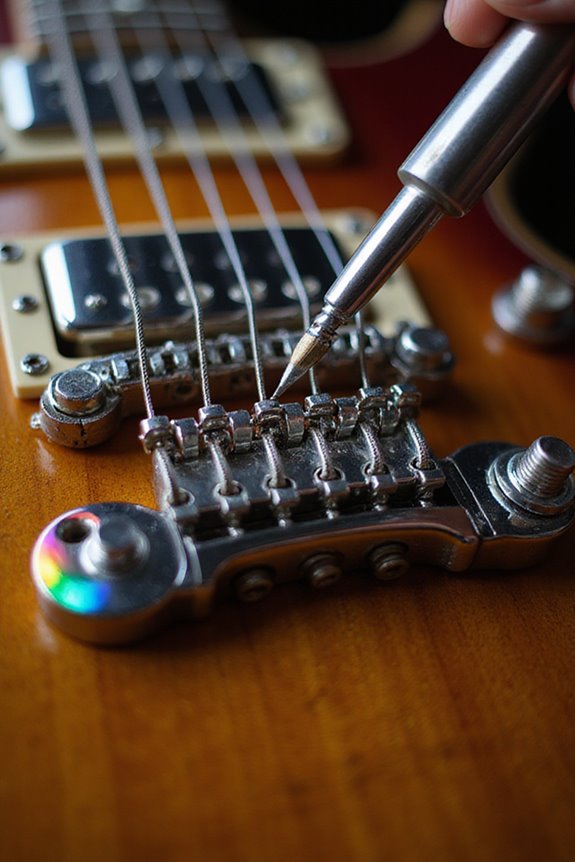
Adjusting string length and saddle position is essential for achieving perfect intonation on our electric guitar. To start, we compare the open string pitch with the 12th fret note using our tuner for precise pitch detection. If the fretted note sounds sharp, we’ll move the saddle backward to lengthen the string, lowering the pitch. Conversely, if it’s flat, we’ll move the saddle forward to shorten the string length. Each saddle movement must be small; even slight adjustments can greatly impact intonation. We should work string by string, retuning after each adjustment to guarantee accuracy. By diligently following these techniques, we can achieve balanced intonation across our guitar, enhancing our playing experience.
Recommended Products

Set of 12 adjustment wrenches

Precision Measurement: Our Kayoubi guitar string action gauge is meticulously engineered with dual measurement scales and laser-etched metric and imperial markings, ensuring every adjustment delivers flawless playability for acoustic, electric, and bass guitars.

Five hex wrench sizes: 10mm, 12mm, 14mm, 1/2", 7/16"
Specific String and Saddle Considerations
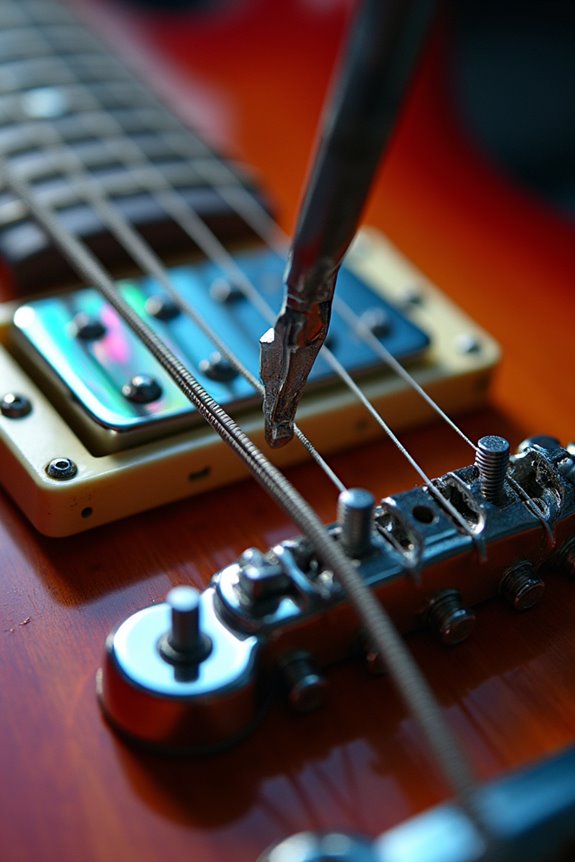
Understanding the relationship between string gauge, saddle position, and intonation is essential for improving our electric guitar’s performance. When we switch to heavier string gauges, it’s vital to readjust saddles to maintain proper intonation. Wound G strings, often preferred in jazz, have different tension and mass profiles than plain G strings, which can necessitate saddle repositioning for precise intonation. The saddle material also plays a role; harder materials like titanium can enhance sustain and intonation stability. Additionally, magnetic pull from pickups can affect thicker strings, so lowering pickup height may help mitigate warbles. By considering string core types and adjusting saddle shapes, we can achieve ideal intonation across the fretboard, enhancing our overall playing experience.
Recommended Products

You love tinkering on your guitar, but have you ever wondered what the "right" setup is

For imported electric guitar or bass bridge saddle height adjustment

Compatibility: Compatible with imported Strat/Tele electric guitar or bass bridge saddle height adjustment. Works perfectly for height adjustment of tremolo bridge saddles on Squier Stratocaster/Telecaster, Gotoh bridges, and Wilkinson bridges
Impact of Guitar Setup Variables on Intonation
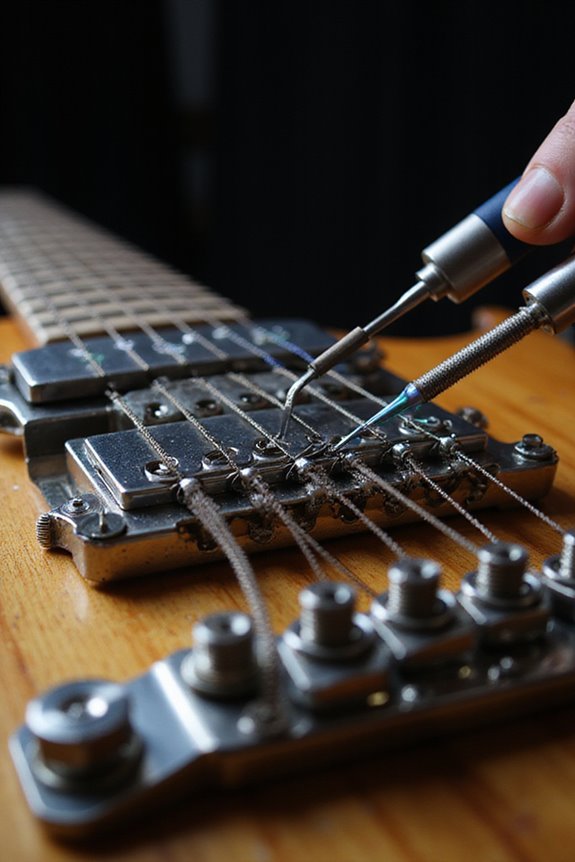
While we often think of intonation as solely the result of saddle adjustments, several guitar setup variables greatly influence it. For instance, neck curvature effects can considerably alter string action and fret contact. An overly bowed neck can cause sharp notes, while a back-bowed neck may lead to flat notes.
String tension dynamics also play an essential role; changing string gauges affects their stiffness, necessitating intonation readjustments. Additionally, action height impacts the effective vibrating length of strings, with higher action causing sharper notes.
Monitoring and Fine-Tuning Intonation Accuracy
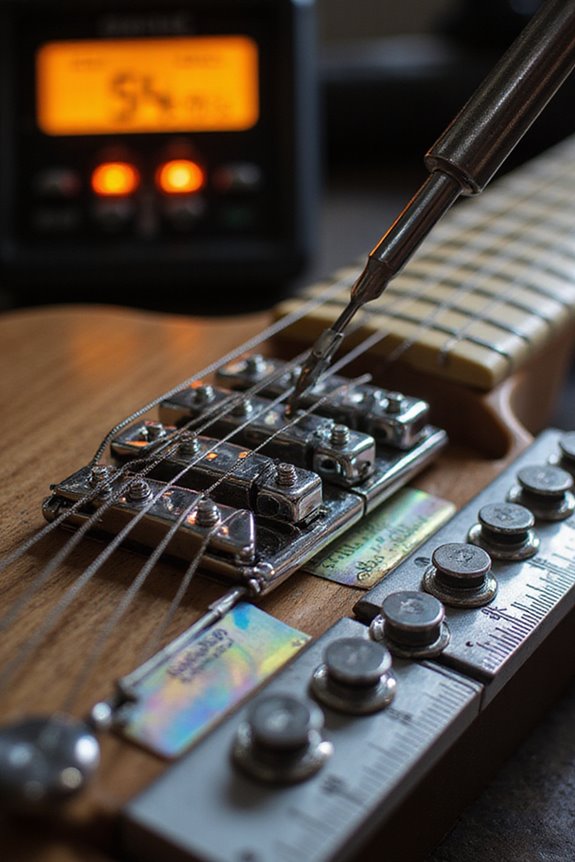
To guarantee our electric guitars sound their best, it’s important to monitor and fine-tune intonation accuracy regularly. Using a high-precision tuner allows us to assess pitch stability precisely. Start by tuning all strings to standard pitch, then check the 12th fret harmonic against the fretted note. If the fretted note is flat, we move the saddle forward; if sharp, we adjust it backward. Consistently checking intonation after string changes or when environmental conditions shift helps prevent intonation troubleshooting later. We should also record saddle positions for future reference. By performing adjustments while holding the guitar as we play, we account for realistic tension, ensuring our intonation remains spot-on across all strings.
Common Pitfalls and Best Practices
As we plunge into setting intonation on electric guitars, it’s essential to recognize that even minor oversights can lead to major tuning issues. One common misconception is that tuning only at the 12th fret is sufficient; we must check multiple frets for accuracy. Uneven fretboards can also create sharp or flat notes, complicating our efforts.
To avoid these pitfalls, let’s tune our strings open first, then adjust saddles incrementally, retuning after each move. It’s vital to maintain proper neck relief with truss rod adjustments before starting. We can dispel intonation myths by understanding that frequent checks across the fretboard help guarantee consistent tuning. By following these best practices, we can enhance our intonation setup considerably.
Adjusting Intonation for Different Bridge Types
When it comes to adjusting intonation, the type of bridge on your electric guitar plays a significant role in how we achieve that ideal tuning. For example, with a Tune-O-Matic bridge, we can individually adjust each saddle using screws or thumbwheels, allowing precise intonation techniques. Hardtail bridges also permit saddle adjustments, but they’re fixed to the body for stability. Conversely, wraparound bridges offer minimal adjustment, often relying on the nut and scale length for intonation. If we’re working with a tremolo bridge, we’ll need to balance string tension carefully, while a Floyd Rose system requires careful saddle adjustments after loosening the locking nuts. Understanding these bridge types helps us master intonation for excellent performance.
Recommended Products

Material: Crafted from zinc alloy, these bridge saddles provide excellent longevity and reliability for your electric guitar.

PERFECT FIT & DIMENSIONS: Drop-in replacement for Fender Stratocaster/Telecaster style electric guitars with 6-saddle tremolo or fixed bridges. Note: Individual saddle width is 10.5mm. Please measure your bridge before ordering.

Maintaining Intonation Over Time
Maintaining intonation over time is essential for guaranteeing that our electric guitars stay in tune, especially during performances or recording sessions. Regular string maintenance is critical; old or worn strings can lead to drift, so we should replace them frequently. We also need to take into account environmental factors. Changes in humidity can cause our guitar’s neck to warp, affecting intonation accuracy. To tackle this, we should keep our instruments stored in a climate-controlled space. Moreover, performing regular intonation checks, especially after significant temperature shifts, helps catch issues early. By tuning our strings fully before adjustments and using precise tuners, we guarantee our guitars remain in peak playing condition, ready for each performance or jam session.
Recommended Products

Professional strobe tuner with ±0.1 cent accuracy (1/1000th of a semitone or fret) for precise tuning across guitar, bass, ukulele, violin, and orchestral instruments. Provides instant visual feedback with zero lag, ensuring perfect pitch every time you tune

RELIABLE TUNING, NO MATTER WHERE YOU PLAY: By sensing vibrations directly from the instrument, tuning stays accurate in loud venues, quiet practice rooms, and everything in between, so you can focus on playing, not compensating for your environment

Full Color Display
Frequently Asked Questions
How Often Should I Check My Guitar’s Intonation?
When we chase that perfect sound, we shouldn’t overlook intonation frequency. Regularly checking intervals, especially after tuning changes or string replacements, helps us keep our music in harmony, ensuring our passion resonates beautifully.
Can Intonation Affect My Guitar’s Playability?
Absolutely, intonation impacts our guitar’s playability factors considerably. When it’s off, notes can sound sharp or flat, making it tough to play in tune. We should regularly check and adjust it for the best experience.
What Tools Are Essential for Basic Guitar Maintenance?
Think of our guitar as a well-tuned orchestra. For maintenance, we need string gauges for action adjustments and fretboard cleaning supplies to keep everything pristine, ensuring our musical masterpiece stays in harmony and plays beautifully.
How Do Temperature Changes Impact Guitar Intonation?
We understand temperature effects can considerably impact guitar intonation. As wood expands or contracts with heat and cold, we’ll notice pitch variations, requiring us to frequently check and adjust our guitars for ideal performance.
Is Intonation Adjustment Necessary for Acoustic Guitars Too?
Just like tuning a ship for smooth sailing, acoustic intonation requires careful adjustment techniques. We understand it’s essential to guarantee our guitars sing in harmony, making intonation adjustment a necessary part of maintaining musical beauty.